Plant with Branches and Fruits: A Designer’s Review
As someone who has spent years digitizing patterns and testing machine embroidery design files on everything from delicate silk to heavy canvas, I approach every new asset with a critical eye. It is not just about whether the file opens correctly; it is about how the design behaves under the needle. Recently, I evaluated the Plant with Branches and Fruits design, and I want to share my practical insights for fellow designers, Etsy sellers, and craft entrepreneurs who are considering adding this piece to their library.
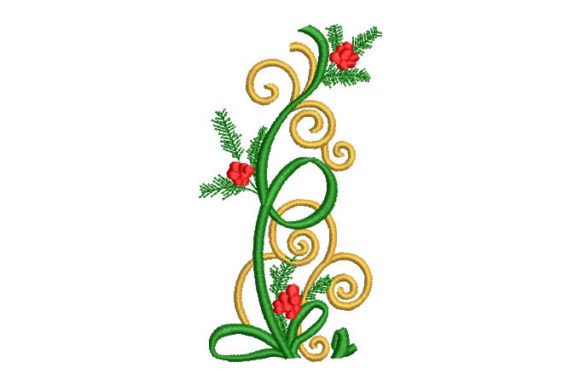
The first impression of Plant with Branches and Fruits is one of organic elegance. Unlike rigid geometric patterns, this design carries a natural flow that mimics the irregular beauty of botanical growth. The layout features intertwining branches laden with fruit, creating a visual rhythm that draws the eye across the hoop. For those of us in the Christmas niche, this motif fits seamlessly into holiday collections, evoking the warmth of winter decor without relying on clichéd snowflakes or Santa figures. However, its versatility extends far beyond seasonal use, making it a strong candidate for year-round embroidery projects.
Visual Appeal and Stitching Clarity
When I loaded the embroidery file into my simulation software, I looked immediately at the stitch types. A successful botanical design relies heavily on the balance between satin stitch for smooth outlines and fill stitch for texture. In Plant with Branches and Fruits, the transition between these elements appears thoughtful. The fruits likely utilize dense fills to create volume, while the branches may use thinner satin or even running stitch variations to maintain delicacy. This contrast is crucial. If the stitch density is too uniform, the design can look flat and plasticky. Here, the variation suggests a tactile quality that customers appreciate in a handmade product.
The visual personality of this design is calm and sophisticated. It does not shout for attention but rather invites a closer look. This subtlety is a significant asset for boutique branding. When used on high-end items, such as linen napkins or cotton tote bags, the design elevates the perceived value of the finished product. It signals professionalism and attention to detail, which are key drivers for customer trust and buyer engagement in competitive marketplaces like Etsy.
Real-World Application: From Mockup to Market
To truly test the viability of Plant with Branches and Fruits, I imagined several real-life scenarios. Let’s consider a custom tote bag design. Tote bags are staples for small shop products, and they offer a large, flat surface ideal for medium-to-large hoops. Placing this botanical motif on the corner of a canvas bag creates an asymmetrical, modern look. The branches can extend gracefully, utilizing the negative space effectively. For an Etsy seller, this kind of placement is trending because it feels less like a stamped logo and more like an artistic accent.
Another strong application is sweatshirt embroidery. Here, the texture of the fabric plays a major role. The plush surface of a fleece or French terry sweatshirt can swallow fine details if the design is not optimized. However, the bold shapes of the fruits in this design should hold up well, providing a cozy, rustic aesthetic perfect for autumn and winter collections. It also works beautifully for holiday embroidery gifts, such as personalized aprons or kitchen towels, where the theme of harvest and abundance resonates with buyers.
For those creating baby embroidery items, caution is advised regarding size and placement. While the motif is charming, ensure that the hoop size allows for enough spacing from seams and edges. A smaller version of this design could adorn a muslin swaddle or a denim jacket, offering a gender-neutral option that appeals to modern parents looking for unique, non-character-based designs.
Technical Considerations and Fabric Compatibility
The product description notes that this design is beautifully embroidered on any type of fabric. As a designer, I interpret this as a testament to its adaptability, but it also places the responsibility on you, the maker, to choose the right materials. Not all fabrics behave the same way. For instance, when working with textured fabrics like wool or tweed, the intricate details of the branches might get lost. In such cases, using a contrasting thread color can help define the shapes.
Thin or stretchy fabrics present another challenge. If you are applying Plant with Branches and Fruits to a lightweight jersey or rayon, proper stabilization is non-negotiable. A cut-away stabilizer is often recommended for garments that will be washed frequently, as it provides lasting support and prevents puckering. Without it, the tension from the fill stitch areas could distort the fabric, ruining the clean lines of the branches.
Dark fabrics require special attention to thread colors. If you are stitching on navy or black, standard green and red threads may not pop. Consider using variegated threads or metallic accents to add depth and visibility. Testing the design on scrap fabric before committing to your final piece is a best practice that saves time and material costs. It allows you to adjust tension and check for any thread breaks or nesting issues.
Commercial Use and Brand Consistency
For creative entrepreneurs and craft business owners, the licensing terms of any digital embroidery file are paramount. Before selling custom apparel or embroidered patch items featuring this design, confirm the license agreement. Most reputable designers allow commercial use for finished physical goods, but restrictions may apply to digital resale or mass production limits. Ensuring compliance protects your business and maintains professional integrity.
From a branding perspective, Plant with Branches and Fruits offers excellent versatility. It can serve as a standalone centerpiece or be combined with text for personalized gifts. When creating printable mockup images for your online store, try displaying the design on various backgrounds. Show it on a crisp white pillow cover, a rustic burlap sack, and a structured cap. This variety helps potential customers visualize the product in their own lives, increasing the likelihood of conversion.
Additionally, consider the scalability of the design. If you plan to offer it in multiple sizes, check how the details hold up when scaled down. Tiny corners and thin lines can become fragile and prone to breaking during stitching if reduced too much. If the design includes small elements, it may be best suited for larger hoops where the details can breathe.
Final Verdict for Makers and Designers
In summary, Plant with Branches and Fruits is a robust addition to any designer’s toolkit. Its organic shape and balanced composition make it suitable for a wide range of applications, from commercial embroidery projects to personal hobby crafts. The design’s ability to convey warmth and natural beauty aligns well with current trends in handmade goods, particularly in the home decor and apparel sectors.
Remember to test the design on your specific machine and fabric combinations. Check the stitch density adjustments if your machine tends to pull tight. Use high-quality threads to enhance the sheen of the fruits and the definition of the branches. By treating this design asset with care and technical precision, you can create stunning pieces that resonate with customers and stand out in a crowded marketplace. Whether you are preparing for the holiday rush or building a year-round collection, this motif offers the flexibility and charm needed to succeed in the modern craft economy.