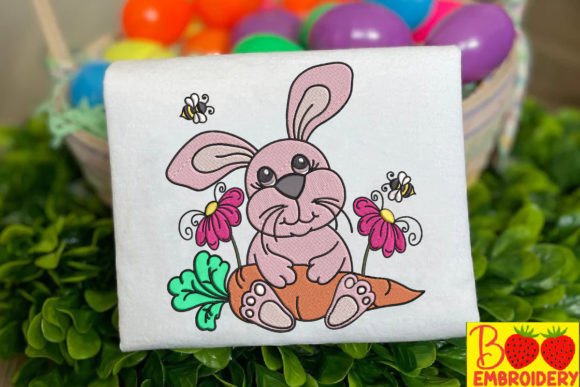
Pink Rabbit Holding Carrots and Flowers Review
As an embroidery designer who spends countless hours testing digital files before they ever touch a customer’s fabric, I have learned that not all cute designs are created equal. Some look charming on a screen but turn into a tangled mess of thread breaks and puckering on actual cloth. Recently, I downloaded the Pink Rabbit Holding Carrots and Flowers machine embroidery design to see if it truly holds up for professional use. My goal was simple: determine if this file is ready for my personalized gift shop or if it needs significant tweaking before I can confidently sell finished products.
The first impression of this design is undeniably sweet. It captures a playful, seasonal mood that feels perfect for springtime projects. The rabbit is depicted in soft pink tones, clutching bright orange carrots and delicate flowers, creating a visual balance that is both vibrant and gentle. For makers targeting the baby market or those looking for Easter-themed items, this aesthetic hits the right emotional notes. It feels handmade and warm, avoiding the sterile look that some overly simplified vector conversions often suffer from. However, charm alone does not make a viable commercial product. I needed to dig deeper into how this design performs under the needle.
Assessing Versatility for Personalized Gifts
The true test of any embroidery file is its versatility. Can it adapt to different substrates without losing its integrity? I planned several mockups to see where the Pink Rabbit Holding Carrots and Flowers design would shine. My primary focus was on items that serve as meaningful keepsakes. I envisioned this design centered on a high-quality embroidered towel, perhaps monogrammed with a child’s name beneath the rabbit. The contrast between the pink thread and a crisp white terry cloth looked promising in my initial digital proofs.
Beyond towels, I explored its potential for nursery decor. A pillow cover featuring this motif could become a staple in a baby’s room, offering a soft, tactile element that parents love. I also considered blanket embroidery applications. Here, caution is key. While the design is adorable, placing it on a thick, plush minky fabric requires careful stabilization to prevent sinking stitches. For Etsy sellers and small shop owners, this design offers strong potential for custom embroidery orders, particularly for baby showers or first birthday gifts. The imagery is gender-neutral enough when paired with the right thread colors, though the default pink leans traditionally feminine, which may appeal specifically to creators of girl-centric baby products.
Navigating Fabric Textures and Technical Challenges
While the design is visually appealing, technical execution is where many beginners stumble. I noticed that the flowers and carrot details involve finer lines. When working with textured fabric, such as linen or heavy canvas, these small details can get lost if the stitch density is not optimized. I strongly advise running a test on scrap fabric that matches your final product material. Do not skip this step. What looks clear on a printable mockup may appear muddy on a rougher weave.
Another critical consideration is the hoop size. Since the product description mentions it comes in multiple sizes, you must confirm which hoop size corresponds to the version you are stitching. Using a hoop that is too large for a small design can lead to fabric shifting, while a hoop that is too tight can distort stretchy baby clothes. If you are applying this to a curved surface, like a hat or a onesie, using a proper stabilizer is non-negotiable. I recommend a cut-away stabilizer for garments that will undergo frequent washing, ensuring the design remains flat and secure over time.
Dark fabric presents another challenge. The pink and light-colored threads in the Pink Rabbit Holding Carrots and Flowers design will not pop against navy or black backgrounds without a solid underlay or a white base layer. Always check thread color contrast before starting your final piece. If you are new to machine embroidery, start with light-colored cotton or poly-cotton blends to see how the stitch density behaves before attempting more difficult materials like silk or stretchy knits.
Enhancing Perceived Value and Customer Trust
For handmade product sellers, the finish of your embroidery directly impacts perceived value. A clean, well-stitched design builds customer trust and encourages repeat business. This particular design, when executed correctly, exudes a high level of handmade quality. It does not look mass-produced; rather, it feels like a thoughtful, custom creation. This emotional connection is vital for wedding gift designers or those creating family keepsakes. Buyers are not just purchasing a towel or a shirt; they are buying a memory.
Product photography plays a huge role here. The bright colors of the carrots and flowers photograph beautifully against neutral backgrounds, making it easier for Etsy sellers to create engaging listings. When customers see a crisp, vibrant image of the finished product, their engagement increases. However, ensure that your photos accurately represent the texture and scale of the embroidery. Misleading images can lead to returns and negative reviews, which can harm a small business’s reputation.
Practical Notes for Commercial Use
Before adding this to your catalog, there are several practical steps every professional should take. First, verify the commercial licensing terms. Just because you purchased a digital embroidery file does not automatically grant you the right to sell unlimited finished products. Check the license agreement provided by the designer to ensure compliance with commercial embroidery standards.
Second, review the stitch count and density settings in your embroidery software. If the design feels too dense for lightweight fabrics, you may need to adjust the pull compensation or reduce the density slightly to prevent puckering. Conversely, if the stitches are too sparse, the fabric might show through, ruining the visual appeal. Always compare light and dark fabric mockups to anticipate how the thread colors will interact with different backgrounds.
Finally, consider the end-user experience. If this design is going on a baby item, ensure that there are no loose threads or scratchy backing materials that could irritate sensitive skin. Trim all jump stitches carefully and consider using a soft tear-away or wash-away stabilizer for items that will be in direct contact with skin.
In conclusion, the Pink Rabbit Holding Carrots and Flowers design is a strong contender for spring and baby-themed collections. It offers a blend of charm and professionalism that, when handled with technical care, can elevate your handmade product line. By paying attention to fabric texture, stabilizer choice, and stitch quality, you can transform this digital file into a beloved physical gift that resonates with customers seeking something special and personal.