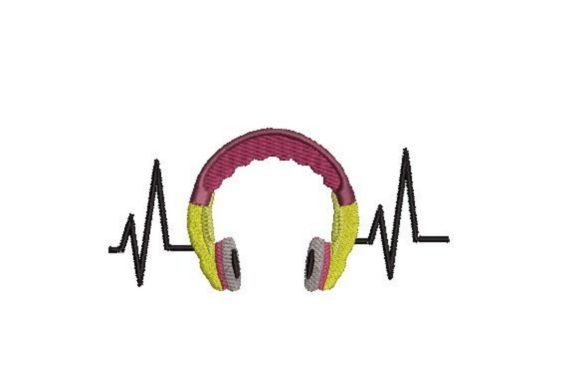
Headphones Heartbeat: A Designer’s Review
As an embroidery designer who has spent countless weekends standing behind craft fair tables, I have learned that a successful booth is built on two things: visual impact and production efficiency. When I first loaded the Headphones Heartbeat machine embroidery design into my software, I was looking for that specific spark—a design that stops a passerby in their tracks while remaining practical enough to stitch out in bulk. This review breaks down how this cute, music-themed motif performs in the real world of handmade sales.
First Impressions: Modern Whimsy Meets Passion
The initial glance at Headphones Heartbeat suggests a blend of modern minimalism and playful affection. It does not scream "rustic farmhouse" or "vintage elegance." Instead, it feels contemporary, appealing to a younger demographic or anyone with a love for audio culture. The concept of combining headphones with a heartbeat line is instantly recognizable. In a crowded market environment, clarity is king. Customers do not have time to decipher abstract art; they want to know what they are looking at within three seconds. This design achieves that immediate connection.
For those of us running a small shop product line, the "cute" factor mentioned in the description is vital. It softens the tech-heavy imagery of headphones, making it approachable for gifts. Whether you are targeting gamers, musicians, or podcast lovers, the emotional hook of the "heartbeat" adds a layer of warmth that pure graphic designs often lack.
Product Versatility: Where It Shines
The true test of any digital embroidery file is its adaptability. I mentally placed Headphones Heartbeat on several standard craft fair items to evaluate its potential.
- Tote Bags: This is arguably the strongest candidate. A canvas tote with this design centered on the front becomes an instant statement piece. The tote bag design potential is high because the motif works well as a focal point without needing excessive background filling.
- Aprons: For a bistro or coffee-shop vibe, apron embroidery featuring this motif on the bib area creates a charming, uniform look for staff or a trendy gift for home cooks who love their tunes.
- Caps and Beanies: Placing a simplified version on the front of a cap can be tricky due to the curved surface. However, if the design scales down well, it makes for a excellent streetwear accessory.
- Patches: Creating an embroidered patch allows customers to buy the design without committing to a full garment. Patches are low-cost, high-margin craft fair products that encourage impulse buys.
I also considered tea towel embroidery. While possible, the texture of waffle weave or thick terry cloth might obscure finer details. If you choose this route, ensure you are using a smooth linen or cotton blend to maintain the integrity of the heartbeat line.
Production Reality: Stitch Density and Clarity
From a technical standpoint, we must address the practicalities of stitching. The description notes that the file comes in multiple formats, which is essential for compatibility with various machines. However, since specific technical data like exact stitch count is not provided in the brief, I strongly advise downloading a demo or checking the detailed specs before committing to a large batch.
Stitch density is a critical factor here. If the headphone cups are too densely stitched, they may pucker lightweight fabrics like tote bag canvas. Conversely, if the heartbeat line is too sparse, it may look jagged. I recommend testing the design on scrap fabric identical to your final product. Pay close attention to the transition between the solid headphone shapes and the thinner heartbeat line. This contrast in thread colors and density must be balanced to prevent thread breaks or nesting.
Another consideration is hoop size. Ensure the design fits comfortably within your standard hoops (likely 4x4 or 5x7 inches) without requiring excessive re-hooping for multi-position designs. Single-hoop designs are always preferable for high-volume production at markets.
Visual Appeal and Customer Engagement
Why does Headphones Heartbeat work for buyer engagement? It tells a story. It says, "Music is my life." This emotional resonance increases the perceived value of the finished product. When displayed in a booth, pair these embroidered items with relevant props—perhaps vintage vinyl records or modern wireless earbuds—to create a cohesive vignette. This context helps the customer visualize the item in their own life.
For online sales, particularly for the Etsy seller, this design photographs beautifully. The clean lines and recognizable iconography translate well to digital screens. Use a printable mockup to show the design on various garments before you even stitch a single thread. This saves time and helps you plan your inventory mix based on which mockups get the most clicks.
Careful-Use Notes for Designers
To ensure your commercial embroidery efforts yield professional results, keep these warnings in mind:
- Fabric Texture: Avoid highly textured fabrics for the heartbeat line. Small details get lost in plush towels or heavy wool.
- Dark Fabrics: If stitching on black or navy, ensure you use high-contrast thread colors. A dark grey headphone on a black shirt will vanish. Consider using a white or neon underlay to make the design pop.
- Stabilizer Selection: Use the right stabilizer for the fabric weight. Cut-away stabilizer is usually best for stretchy fabrics like t-shirts, while tear-away works for stable woven totes. Incorrect stabilization leads to distortion, ruining the crisp look of the headphones.
- Scaling Limits: Do not shrink the design below its intended minimum size. Tiny lettering or thin lines may become unrecognizable or fail to stitch out cleanly.
Final Verdict for Craft Fair Sellers
Headphones Heartbeat is a strong contender for your next collection. It bridges the gap between niche interest (music lovers) and broad appeal (cute aesthetic). It is versatile enough to work on handmade products ranging from utility items like aprons to fashion accessories like caps.
Before you launch, confirm the commercial licensing terms included with your purchase. Most designers allow finished product sales, but restrictions on sharing the design assets themselves are standard. Once cleared, start small. Stitch a few samples, gauge customer reaction at your next local market, and scale up the winners. With proper testing and smart product placement, this design can become a staple in your Embroidery and Music themed offerings, driving both foot traffic and online conversions.